Shorts archives

Stealing their right to vote and attributing it to someone else, writes Daniel Loeb in The Philadelphia Jewish Voice.

by Elena Lavarreda, May 3, 2010

Dr. Daniel E. Loeb recently wrote a compelling piece for The Philadelphia Jewish Voice entitled, Political Prisoners in the United State? Depoliticizing our Criminal System?

Loeb grapples with the concept of “political prisoner” and asks, “Does the United States actually have political prisoners?”

There might be many reasons why the answer to the question is a firm “yes!”, but in Dr. Loeb’s piece he discusses two ways in which, “…millions of American citizens in the criminal justice system … are pawns in our political system”; first, through “voter suppression”, and second, through the “enumeration of prisoners”.

After a discussion of voter suppression, he asks the reader:

What could be worse that suppressing someone’s right to vote?

He cleverly answers:

Stealing their right to vote and attributing it to someone else.

Otherwise known as–prison-based gerrymandering! Loeb clearly demonstrates the negative state and local level impact that counting prisoners as residents of their prison cell has on American democracy, but he finds room for optimism. He applauds the Census Bureau for their early release of the group quarter counts:

Fortunately, the census bureau has become more attentive to the situation. Census Director Robert Groves has agreed to identify which census blocks contain group quarters such as correctional facilities early enough so that state and local redistricting bodies can choose to use this data to draw fair districts.

Counting inmates in council districts skews representation.

by Peter Wagner, April 23, 2010

Mark Bennett writes in the Terre Haute Indiana Tribune Star on April 15: Does counting inmates in council districts skew representation? Policy group says yes.

Bennett explains the One Person One Vote problem created by padding one City Council ward with a large and growing federal prison complex, and interviews the city councilor from that district who says he wouldn’t oppose change.

The final paragraphs of the column:

“If the town wants to give everyone the same influence over city affairs, they need to give everyone in the city the same access to government,” Wagner said.

The city should consider Wagner’s point before drawing those lines….

This column reflects a new stage in a years-long debate in Terre Haute. I wrote letters to the editor in July 2009 and March 2006. With city council redistricting almost upon us, the timing is right for reform.


Activists and the major paper on Maryland's Eastern Shore are hailing the passage of the No Representation Without Population act.

by Peter Wagner, April 23, 2010

I forgot to post this last weekend, but it’s worth sharing now.

On April 17, the Daily-Times on Maryland’s Eastern Shore hailed the passage of Maryland’s new No Representation Without Population Act. A day earlier, the paper interviewed local activists who also cheered the passage of the law.

The “No Representation Without Population Act” requires prisoner populations be counted in their home districts, not where they are incarcerated.


NYT Editorial: Maryland struck blow for electoral fairness, requires prisoners be counted at their homes when districts are redrawn after census.

by Peter Wagner, April 14, 2010

The New York Times editorial board has an editorial praising Maryland’s new law requiring that incarcerated people be counted at home for redistricting purposes:


Two great pieces today on Change.org about our prison-based gerrymandering work in Maryland and Rhode Island.

by Peter Wagner, April 14, 2010

Two great pieces today on Change.org about our prison-based gerrymandering work in Maryland and Rhode Island:

  • Maryland’s Big Step on Prison Census Reform, by Matt Kelley, April 14, 2010
  • The Case of Cranston’s Phantom Prison Constituents, by Te-Ping Chen April 14, 2010

Eric Lotke wrote an outstanding piece today highlighting our recent victory in Maryland and putting it in context of the national effort.

by Elena Lavarreda, April 14, 2010

Eric Lotke wrote an outstanding piece today highlighting our recent victory in Maryland, while managing to locate the issue in the ongoing national struggle to fix the Census miscount. His article was featured on the DailyKos, Huffington Post, Campaign for America’s Future and other outlets.

Lotke’s clear demonstration of the long lasting and damaging effect of prison-based gerrymandering on democracy is profound. When discussing discussing the racial and ethnic impact of the Census miscount, he states:

“These numbers are too high for all kinds of reasons — but the impact on redistricting carves it into the bones of our democracy.”

Despite our victory in Maryland, Lotke is right to point out where the Census has faltered and what states can do to make sure they draw fair and equal districts:

Still, the Census Bureau has stubbornly refused to change its rules and count people in prison in the location that they come from and return to. It has conceded for the 2010 census to release its micro data early enough that states and counties who choose to can reassess prison jurisdictions in time for reapportionment. But Maryland sets a new standard by taking matters into its own hands. Technical matters of implementation will need to be worked out (they have ten years!) but the law states a clear legislative intent. Constituents are not exportable commodities.


The Valley Advocate profiles our work on prison-based gerrymandering.

by Peter Wagner, April 9, 2010

Maureen Turner at The Valley Advocate has written an excellent profile of our work:

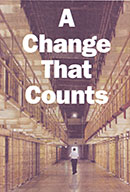
newsthumbJail and the Census: A Change That Counts, Easthampton’s Prison Policy Initiative scores a victory for fair political representation

I particularly liked how she explained the significance of the Census Bureau’s decision to publish prison counts earlier:

That might not sound like much — a government agency releasing a relatively small amount of its collected data a little earlier than usual. But the consequences will be significant, making it easier for states to ensure that their legislative districts are fair representations of actual populations.

And it wasn’t just those residents who were poorly served by the formula. Because the prisoners were not counted at the homes where they lived before their arrest — and where, it can be assumed, many would return upon their release — those communities also suffered, as their population count, for the purpose of distributing political representation, shrank.

While in an ideal world, Wagner said, the Census would have made a much broader chang e– to counting prisoners at their previous home addresses — such a policy would have had to be created years ago to be ready for the 2010 count. The early release of data, while not a complete fix, is still a welcomed one, he said: “It will solve a lot of people’s problems, and there was still time to do it.”


by Peter Wagner, March 31, 2010

We have new reports on prison-based gerrymandering in Connecticut and California:


Brenda Wright of Demos has an editorial in American Prospect and Nathaniel Hoffman takes on prison-based gerrymandering in Idaho.

by Peter Wagner, March 31, 2010

There are two must read pieces today:


by Peter Wagner, March 30, 2010

Brenda Wright at Demos has an editorial in today’s American Prospect: The Census and the Cell Block.


Stay Informed


Get the latest updates:


Share on 𝕏 Donate