Rural areas have 20% of population, but 60% of new prisons
by Peter Wagner, July 28, 2003
In the words of U.S. Department of Agriculture demographer Calvin Beale: “A rural prison is a classic ‘export’ industry, providing a service for the outside community. Unlike some other rural services, such as recreation, the employment is year round.” Although rural counties contain only 20% of the national population, they have snapped up 60% of new prison construction. Like export processing zones in Third World countries, even the raw material is imported for final manufacture. In New York, for example, only 24% of prisoners are from upstate, but 91% of prisoners are incarcerated there.
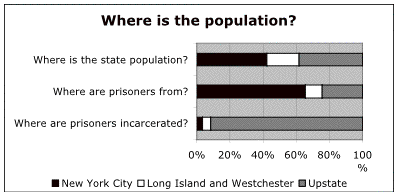
The most troubling aspect of miscounting prisoners in this fashion is the potential to change the balance of political power between communities who stand on opposite ends of state crime control policy. Taking electoral clout from urban communities which are the most negatively affected by aggressive incarceration policy, and giving that clout to rural communities that benefit from prison jobs has the potential of launching a cycle of prison growth without a democratic restraint.


